Back
Desk Research
Desk Research


2024, Research Paper on
Accounting practitioners’ perspectives on small- and medium-sized enterprises’ environmental sustainability reporting

Framework Comparison Matrix
Framework Comparison Matrix

Indian ESG Reporting Platforms
Indian ESG Reporting Platforms
Positioning Model 1
Positioning Model 1
Indian ESG digital platforms offer moderate to high usability and affordability, tailored to local regulatory contexts with growing but limited market reach and moderately advanced features.
Indian ESG digital platforms offer moderate to high usability and affordability, tailored to local regulatory contexts with growing but limited market reach and moderately advanced features.
Impact and Weakness Factors:
Despite good platform availability, SMEs report low adoption rates, with studies indicating less than 20% of Indian SMEs engage in formal sustainability reporting due to limited awareness, skills, and perceived value (Source: OECD 2025).
Weaknesses include scalability constraints, limited multi-lingual/localization features, and insufficient ecosystem support beyond the software tool itself.
Impact and Weakness Factors:
Despite good platform availability, SMEs report low adoption rates, with studies indicating less than 20% of Indian SMEs engage in formal sustainability reporting due to limited awareness, skills, and perceived value (Source: OECD 2025).
Weaknesses include scalability constraints, limited multi-lingual/localization features, and insufficient ecosystem support beyond the software tool itself.
User-Friendliness
User-Friendliness
Feature Completeness
Feature Completeness
Market Reach
Market Reach
Cost
Cost
0
0
100
100
100
100
100
100
100
100

Global ESG Reporting Platforms
Global ESG Reporting Platforms
Positioning Model 2
Positioning Model 2
Global ESG platforms excel in feature depth and market reach, offering advanced, scalable solutions primarily targeting large enterprises, albeit at a premium cost and higher complexity.
Global ESG platforms excel in feature depth and market reach, offering advanced, scalable solutions primarily targeting large enterprises, albeit at a premium cost and higher complexity.
Impact and Weakness Factors:
Though widely adopted by large firms, SME penetration remains low globally, with less than 25% of SMEs reporting ESG metrics, hindered by high costs, technical complexity, and infrastructure gaps (Source: Roots Analysis 2025).
The challenge remains to tailor these platforms to SME contexts with simpler workflows and affordable pricing.
Impact and Weakness Factors:
Though widely adopted by large firms, SME penetration remains low globally, with less than 25% of SMEs reporting ESG metrics, hindered by high costs, technical complexity, and infrastructure gaps (Source: Roots Analysis 2025).
The challenge remains to tailor these platforms to SME contexts with simpler workflows and affordable pricing.
User-Friendliness
User-Friendliness
Feature Completeness
Feature Completeness
Market Reach
Market Reach
Cost
Cost
0
0
100
100
100
100
100
100
100
100


06/
System Dynamics

06/
System Dynamics

Problem Areas
07/
Problem Areas
Economic

Skill

Data

Governance

Problem Areas
07/
Problem Areas
Economic
Skill
Data
Governance

Target Audience
08/
Stakeholders
90%
Small & Medium Enterprises (SMEs)
Primary audience for service design, representing over 90% of businesses globally.
62%
Accounting Practitioners
European context: Approximately 49,000 listed SMEs expected to be affected by upcoming regulations.
User Context Overview
Who
SMEs across industries and sizes
SME owners, directors, and sustainability managers
SMEs linked to large corporates as suppliers or contractors
SMEs in regions with emerging or upcoming ESG regulatory mandates (India, EU, APAC, etc.)
What
ESG reporting and data management platform tailored for SMEs
Simplifies compliance with ESG mandates and frameworks
Facilitates data collection, verification, and reporting for investors and regulators
Connects SMEs with accounting practitioners and investors for support and capital
When
In the current transition phase (2025-2035) where ESG reporting for SMEs is becoming mandatory or highly demanded
When supply chain pressures from large corporations require SME disclosures
Alignment with regulatory timelines like EU CSRD 2026 mandate and India's BRSR rollout
Where
Primarily markets with ESG regulatory frameworks targeting SMEs (India, EU, UK, US, APAC)
SME supply chains linked to publicly listed companies
Digital platform accessible globally, supporting cross-border ESG standards
Why
To help SMEs comply efficiently with complex ESG regulations
To build credibility and trust with investors through verified ESG data
To reduce the cost and complexity of sustainability reporting for SMEs
To enable SMEs to access sustainable investment opportunities
To foster transparency and a circular ecosystem linking SMEs, practitioners, and investors in a regenerative ESG reporting cycle
Stakeholder Mapping
Keep Satisfied
Supply Chain Partners
Professional Accounting Bodies
Monitor
Universities and Training Institutes
Technology/Digital Platform Providers
Keep Informed
Investors
Customers
Employees
Manage Closely
SMEs
Accounting practitioners
Regulators
Manage Closely
SMEs: Primary producers and users of ESG reports, directly impacted by cost, skills, and regulatory barriers.
Accounting Practitioners: Key facilitators who support SMEs in ESG data collection and compliance.
Regulators: Set mandatory frameworks and enforce compliance, making their involvement pivotal.
Keep Satisfied
Supply Chain Partners: Large firms that pressure SMEs to report ESG metrics.
Professional Accounting Bodies: Provide training and standard-setting for practitioners; they support framework legitimacy.
Keep Informed
Investors: They require consistency and accuracy for investment decisions but interact less frequently with SMEs directly.
Customers and Employees: Benefit from transparency and improved corporate images.
Monitor
Universities and Training Institutes: Provide education and research Keeping track of their developments in training and research ensures future alignment.
Technology/Digital Platform Providers: Develop reporting tools and digital solutions but depend on demand from SMEs and practitioners.
Target Audience
08/
Stakeholders
90%
Small & Medium Enterprises (SMEs)
Primary audience for service design, representing over 90% of businesses globally.
62%
Accounting Practitioners
European context: Approximately 49,000 listed SMEs expected to be affected by upcoming regulations.
User Context Overview
Who
SMEs across industries and sizes
SME owners, directors, and sustainability managers
SMEs linked to large corporates as suppliers or contractors
SMEs in regions with emerging or upcoming ESG regulatory mandates (India, EU, APAC, etc.)
What
ESG reporting and data management platform tailored for SMEs
Simplifies compliance with ESG mandates and frameworks
Facilitates data collection, verification, and reporting for investors and regulators
Connects SMEs with accounting practitioners and investors for support and capital
When
In the current transition phase (2025-2035) where ESG reporting for SMEs is becoming mandatory or highly demanded
When supply chain pressures from large corporations require SME disclosures
Alignment with regulatory timelines like EU CSRD 2026 mandate and India's BRSR rollout
Where
Primarily markets with ESG regulatory frameworks targeting SMEs (India, EU, UK, US, APAC)
SME supply chains linked to publicly listed companies
Digital platform accessible globally, supporting cross-border ESG standards
Why
To help SMEs comply efficiently with complex ESG regulations
To build credibility and trust with investors through verified ESG data
To reduce the cost and complexity of sustainability reporting for SMEs
To enable SMEs to access sustainable investment opportunities
To foster transparency and a circular ecosystem linking SMEs, practitioners, and investors in a regenerative ESG reporting cycle
Stakeholder Mapping
Keep Satisfied
Supply Chain Partners
Professional Accounting Bodies
Monitor
Universities and Training Institutes
Technology/Digital Platform Providers
Keep Informed
Investors
Customers
Employees
Manage Closely
SMEs
Accounting practitioners
Regulators
Manage Closely
SMEs: Primary producers and users of ESG reports, directly impacted by cost, skills, and regulatory barriers.
Accounting Practitioners: Key facilitators who support SMEs in ESG data collection and compliance.
Regulators: Set mandatory frameworks and enforce compliance, making their involvement pivotal.
Keep Satisfied
Supply Chain Partners: Large firms that pressure SMEs to report ESG metrics.
Professional Accounting Bodies: Provide training and standard-setting for practitioners; they support framework legitimacy.
Keep Informed
Investors: They require consistency and accuracy for investment decisions but interact less frequently with SMEs directly.
Customers and Employees: Benefit from transparency and improved corporate images.
Monitor
Universities and Training Institutes: Provide education and research Keeping track of their developments in training and research ensures future alignment.
Technology/Digital Platform Providers: Develop reporting tools and digital solutions but depend on demand from SMEs and practitioners.

Methodology
09/
Methodology
This project follows the Double Diamond design process, a structured approach developed by the UK Design Council that emphasizes divergent and convergent thinking across four phases: Discover, Define, Develop, and Deliver. This framework supports a human-centered, evidence-based approach to service design, ensuring thorough exploration of the problem space before converging on innovative, feasible solutions.
Brief
Cluster Topics
Insight
Theme
Opportunity Areas
HMW
Ideation
Evaluation
Built
Test
Iterate
Out
A
B
Activity
Brief
Discover
Cluster Topics
Insight
Theme
Opportunity Areas
How Might We
Designing the right thing
Question, Challenge, Client brief
Research Findings
Final brief, HMW Question
Ideas
Answer, Product, Solution
Designing things right
Define
Develop
Deliver
Don’t know
Could be
Do know
Should be
Research on the challenges and opportunities of environmental sustainability (ESG) reporting among SMEs, focusing on insights from accounting practitioners. SMEs face increasing pressure from regulators and supply chains to report ESG data but are hindered by costs, skills, and system limitations. A service design project leverages existing Irish survey data of 203 accounting practitioners to frame problem and solution spaces.
SMEs, constituting approximately 90% of all companies globally, generate vast ESG data that remains largely untapped. Empowering these enterprises with practical, cost-effective sustainability reporting solutions and practitioner support can harness this data for greater environmental and social impact, contributing significantly to global sustainability goals.
SME ESG reporting challenges: cost, data capture, skill gaps
Regulatory landscape: CSRD and voluntary standards for SMEs
Role of accounting practitioners as enablers/advisors
Supply chain pressures and value chain influence
Feasibility and benefits of adapted SME reporting frameworks (GRI abridged)
Training, tools, and support ecosystem needs for SMEs
62% of accounting practitioners indicate metrics suitability as feasible for SMEs
Cost is the biggest reported barrier for SMEs to implement sustainability reporting
SMEs motivated by company image improvement, regulatory preparation, and supply chain demands
Significant skill and technology gaps reduce SME readiness
Regulatory timelines (e.g., EU CSRD 2026-2029 for SMEs) increase urgency
Supply chain and investor requirements extend ESG reporting impact beyond listed companies
Develop simplified, cost-effective ESG reporting frameworks tailored to SME capacities
Build digital tools for accessible data capture and reporting
Accounting practitioner training for sustainability metrics and advisory
Create government and industry-supported consultancy and financial incentive programs
Facilitate supply chain collaboration for data transparency and consistency
Educate SMEs on ESG importance, benefits, and reporting processes
simplify ESG reporting to suit SME operational realities without compromising data quality?
support accounting practitioners to upskill and efficiently assist SMEs?
lower entry barriers by reducing costs and technology demands for SMEs?
foster collaborative ecosystem between SMEs, supply chains, and regulators?
build awareness and motivation in SMEs to voluntarily adopt sustainability reporting?
Ethical and Methodological Considerations
Use of Borrowed Primary Data
The survey data from O’Reilly et al. (2025) was used ethically and transparently, with full citation. It served as a valid proxy given the homogeneity of SME reporting challenges across developed economies and the credibility of the peer-reviewed source.
Limitations:
Geographic specificity (Ireland-based data) may limit direct applicability to other regions.
Lack of direct SME input means some contextual nuances may be missed.
Mitigation:
Secondary data from global sources (e.g., EU CSRD, World Bank) was used to broaden relevance and ensure cross-contextual validity.
Methodology
09/
Methodology
This project follows the Double Diamond design process, a structured approach developed by the UK Design Council that emphasizes divergent and convergent thinking across four phases: Discover, Define, Develop, and Deliver. This framework supports a human-centered, evidence-based approach to service design, ensuring thorough exploration of the problem space before converging on innovative, feasible solutions.
Brief
Cluster Topics
Insight
Theme
Opportunity Areas
HMW
Ideation
Evaluation
Built
Test
Iterate
Out
A
B
Activity
Brief
Discover
Cluster Topics
Insight
Theme
Opportunity Areas
How Might We
Designing the right thing
Question, Challenge, Client brief
Research Findings
Final brief, HMW Question
Ideas
Answer, Product, Solution
Designing things right
Define
Develop
Deliver
Don’t know
Could be
Do know
Should be
Research on the challenges and opportunities of environmental sustainability (ESG) reporting among SMEs, focusing on insights from accounting practitioners. SMEs face increasing pressure from regulators and supply chains to report ESG data but are hindered by costs, skills, and system limitations. A service design project leverages existing Irish survey data of 203 accounting practitioners to frame problem and solution spaces.
SMEs, constituting approximately 90% of all companies globally, generate vast ESG data that remains largely untapped. Empowering these enterprises with practical, cost-effective sustainability reporting solutions and practitioner support can harness this data for greater environmental and social impact, contributing significantly to global sustainability goals.
SME ESG reporting challenges: cost, data capture, skill gaps
Regulatory landscape: CSRD and voluntary standards for SMEs
Role of accounting practitioners as enablers/advisors
Supply chain pressures and value chain influence
Feasibility and benefits of adapted SME reporting frameworks (GRI abridged)
Training, tools, and support ecosystem needs for SMEs
62% of accounting practitioners indicate metrics suitability as feasible for SMEs
Cost is the biggest reported barrier for SMEs to implement sustainability reporting
SMEs motivated by company image improvement, regulatory preparation, and supply chain demands
Significant skill and technology gaps reduce SME readiness
Regulatory timelines (e.g., EU CSRD 2026-2029 for SMEs) increase urgency
Supply chain and investor requirements extend ESG reporting impact beyond listed companies
Develop simplified, cost-effective ESG reporting frameworks tailored to SME capacities
Build digital tools for accessible data capture and reporting
Accounting practitioner training for sustainability metrics and advisory
Create government and industry-supported consultancy and financial incentive programs
Facilitate supply chain collaboration for data transparency and consistency
Educate SMEs on ESG importance, benefits, and reporting processes
simplify ESG reporting to suit SME operational realities without compromising data quality?
support accounting practitioners to upskill and efficiently assist SMEs?
lower entry barriers by reducing costs and technology demands for SMEs?
foster collaborative ecosystem between SMEs, supply chains, and regulators?
build awareness and motivation in SMEs to voluntarily adopt sustainability reporting?
Ethical and Methodological Considerations
Use of Borrowed Primary Data
The survey data from O’Reilly et al. (2025) was used ethically and transparently, with full citation. It served as a valid proxy given the homogeneity of SME reporting challenges across developed economies and the credibility of the peer-reviewed source.
Limitations:
Geographic specificity (Ireland-based data) may limit direct applicability to other regions.
Lack of direct SME input means some contextual nuances may be missed.
Mitigation:
Secondary data from global sources (e.g., EU CSRD, World Bank) was used to broaden relevance and ensure cross-contextual validity.

Primary Data
Source Research Paper on
Accounting practitioners’ perspectives on small- and medium-sized enterprises’ environmental sustainability reporting
Table 1: Feasibility of Key Metrics (RQ1)
Survey Question: "Based on the attached framework, do you consider the key headings feasible for SMEs to report?"
10/
Primary Data

Table 2: Feasibility of Framework Implementation Dimensions (RQ1)
Survey Question: "Do you believe the framework attached to this survey is feasible in terms of the following dimensions? Please rank 1-5, 1 = most feasible 5 = least feasible"
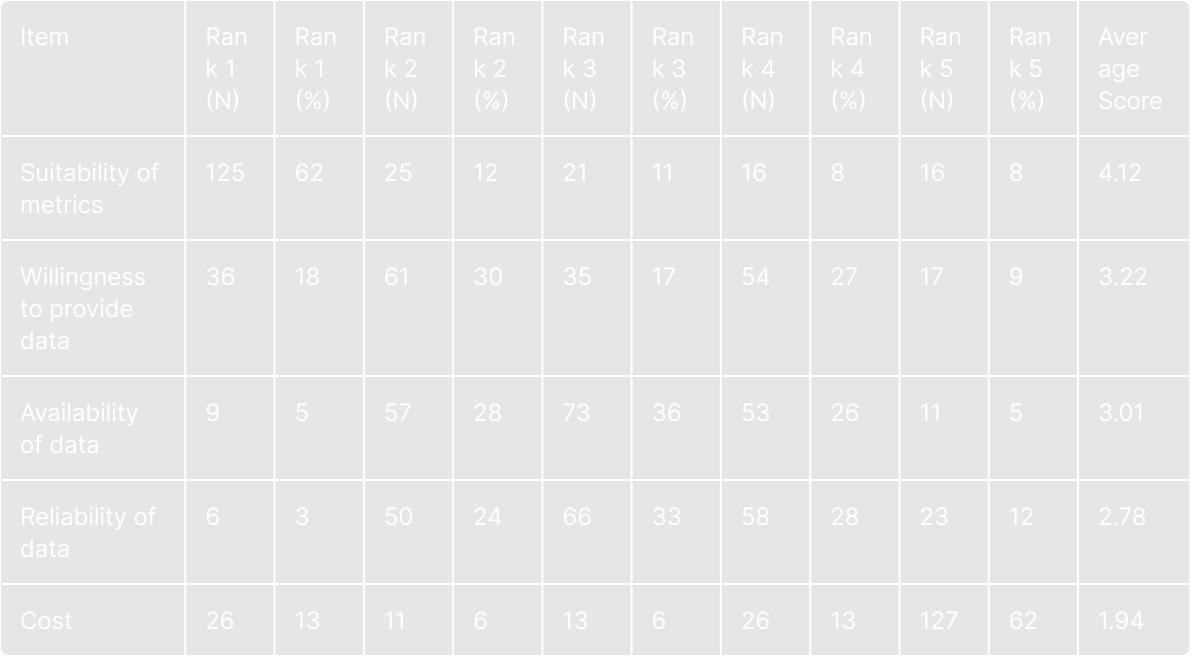
Table 3: Benefits of Implementing Sustainability Reporting (RQ2)
Survey Question: "What are the benefits to your clients (SMEs) in implementing sustainability reporting? Please rank 1-7, 1 = most beneficial 7 = least beneficial"

Key Implementation Challenges (Beyond Cost)
Based on open-ended responses from practitioners:
Insufficient time: 60% of respondents
Absence of employees with skills to collect environmental data: 30% of respondents
Absence of mandatory regulations for SMEs: 25% of respondents
Extra bureaucratic burden: Significant concern
Critical Statistics from the Study
SMEs represent: Over 90% of all businesses globally
EU listed SMEs under CSRD: Estimated 49,000 companies by 2026
Cost barrier: 62% of respondents ranked cost as least feasible implementation dimension
Framework suitability: 62% of practitioners ranked "suitability of metrics" as most feasible
Primary Data
Source Research Paper on
Accounting practitioners’ perspectives on small- and medium-sized enterprises’ environmental sustainability reporting
Table 1: Feasibility of Key Metrics (RQ1)
Survey Question: "Based on the attached framework, do you consider the key headings feasible for SMEs to report?"
10/
Primary Data
Table 2: Feasibility of Framework Implementation Dimensions (RQ1)
Survey Question: "Do you believe the framework attached to this survey is feasible in terms of the following dimensions? Please rank 1-5, 1 = most feasible 5 = least feasible"
Table 3: Benefits of Implementing Sustainability Reporting (RQ2)
Survey Question: "What are the benefits to your clients (SMEs) in implementing sustainability reporting? Please rank 1-7, 1 = most beneficial 7 = least beneficial"
Key Implementation Challenges (Beyond Cost)
Based on open-ended responses from practitioners:
Insufficient time: 60% of respondents
Absence of employees with skills to collect environmental data: 30% of respondents
Absence of mandatory regulations for SMEs: 25% of respondents
Extra bureaucratic burden: Significant concern
Critical Statistics from the Study
SMEs represent: Over 90% of all businesses globally
EU listed SMEs under CSRD: Estimated 49,000 companies by 2026
Cost barrier: 62% of respondents ranked cost as least feasible implementation dimension
Framework suitability: 62% of practitioners ranked "suitability of metrics" as most feasible

11/
Personas
Name: Sean Murphy, SME-Focused Accounting Practitioner.
Demographics:
Age: 38
Gender: Male
Location: Dublin, Ireland
Education: Chartered Accountant (ACA), Member of Chartered Accountants Ireland
Years of Experience: 12
Current Role: Senior Partner at SME-focused accountancy practice
Professional body involvement: Active in ACCA/CPA/CAI communities, attends CPD events, consults with 25+ SME clients
Goals:
To be a trusted advisor guiding SME clients through new financial and sustainability challenges
To help SMEs improve company image, productivity, and regulatory readiness by integrating sustainability reporting
To remain current and compliant with evolving regulatory frameworks (e.g., EU CSRD/GRI standards)
To grow the practice by delivering services that meet emerging SME needs (ESG and beyond)
Motivations:
Belief in sustainability as a business driver and differentiator
Reputation as a progressive, well-informed practitioner
Generation of long-term client loyalty through new service offerings
Desire for professional advancement through leadership in new reporting fields
Needs:
Practical, SME-specific sustainability reporting frameworks that avoid the complexity of large company standards
Clear, accessible education and training on GRI/ESG metrics relevant for SMEs
Reliable tools and templates for streamlined data capture and reporting
Examples of best practices to build SME client buy-in and competence
Ongoing policy updates on new or upcoming reporting obligations
Pain Points:
High cost and time required to implement environmental reporting for smaller clients (62% cite cost as the least feasible dimension)
Limited skills and capacity 30% of clients lack staff with the expertise to collect environmental data
Absence of mandatory regulation and incentives means SMEs are not always willing to engage
Need for SME clients to improve their own data capture and management systems
Frustration that general reporting guidelines are often not tailored, practical, or flexible enough for real SME situations
“Clients see value for company image and regulatory preparation, but worry about the real cost and skills needed.”

Name: Priya Patel, SME Owner/Director.
Demographics:
Age: 45
Gender: Female
Location: Ahmedabad, India
Business: Owner of a 40-employee packaging SME
Years of Operation: 15
Education: Bachelor’s in Business Administration
Goals:
Keep the business profitable and compliant with regulations
Enhance company reputation and appeal to new supply chain partners
Maintain operational efficiency without adding unnecessary overhead
Motivations:
Attract business from large, ESG-conscious buyers
Anticipate and comply with future sustainability standards
Build trust and loyalty with customers and employees
Company image improvement ranks as the top benefit (31% priority among practitioners), directly impacting customer relationships and market positioning. Regulatory preparation is essential as sustainability standards evolve globally practitioners rank it as the third most beneficial outcome for SMEs.
Needs:
Simple, affordable tools and guidance for sustainability reporting
Trusted advice from practitioners who understand SME realities
Clear, practical steps no jargon or excessive documentation
Pain Points:
ESG reporting remains costly and complex to maintain.
Staff lack specialized skills for accurate ESG data.
Evolving regulations and verification demand create uncertainty.
Benefits from ESG compliance feel delayed, especially for securing investments.
"I'm already struggling with rising operational costs how can I justify spending lakhs on sustainability reporting when I don't even know if it'll bring more business?"

Does:
Manages daily operations across production, sales, and finance
Consults her accountant when new compliance demands arise
Reviews potential reporting tools only if cost-effective
Says:
“Suitability of metrics is high, but cost and time remain major hurdles.”
“Clients value image improvement and regulatory readiness most.”
“We need reliable data sources and practical frameworks.”
Says:
“Suitability of metrics is high, but cost and time remain major hurdles.”
“Clients value image improvement and regulatory readiness most.”
“We need reliable data sources and practical frameworks.”
Says:
“I can’t justify extra costs without clear ROI.”
“My team doesn’t have the skills to gather environmental data.”
“Regulations change too fast—just tell me what matters.”
Does:
Advises 25+ SME clients on financial and sustainability matters
Attends CPD events and webinars on ESG standards
Develops templates and guides to streamline data collection
Thinks:
“How can I deliver ESG services without overburdening my SME clients?”
“If reporting tools were simpler, adoption would increase.”
“My career growth depends on staying ahead of CSRD and GRI updates.”
Thinks:
“Is sustainability reporting really worth my time and money?”
“I need a step-by-step tool that fits into our workflow.”
“If I lose a major contract over ESG, it’s a big risk.”
Feels:
Frustrated by client resistance due to cost and complexity
Motivated by the potential to differentiate his practice
Concerned about maintaining data reliability and client trust
Feels:
Overwhelmed by additional reporting requirements
Skeptical about intangible benefits like “improved image”
Pressured by supply chain demands and looming regulatory deadlines
Empathy Map
Attitudinal Insights
Behavioral Insights
11/
Personas
Name: Sean Murphy, SME-Focused Accounting Practitioner.
Demographics:
Age: 38
Gender: Male
Location: Dublin, Ireland
Education: Chartered Accountant (ACA), Member of Chartered Accountants Ireland
Years of Experience: 12
Current Role: Senior Partner at SME-focused accountancy practice
Professional body involvement: Active in ACCA/CPA/CAI communities, attends CPD events, consults with 25+ SME clients
Goals:
To be a trusted advisor guiding SME clients through new financial and sustainability challenges
To help SMEs improve company image, productivity, and regulatory readiness by integrating sustainability reporting
To remain current and compliant with evolving regulatory frameworks (e.g., EU CSRD/GRI standards)
To grow the practice by delivering services that meet emerging SME needs (ESG and beyond)
Motivations:
Belief in sustainability as a business driver and differentiator
Reputation as a progressive, well-informed practitioner
Generation of long-term client loyalty through new service offerings
Desire for professional advancement through leadership in new reporting fields
Needs:
Practical, SME-specific sustainability reporting frameworks that avoid the complexity of large company standards
Clear, accessible education and training on GRI/ESG metrics relevant for SMEs
Reliable tools and templates for streamlined data capture and reporting
Examples of best practices to build SME client buy-in and competence
Ongoing policy updates on new or upcoming reporting obligations
Pain Points:
High cost and time required to implement environmental reporting for smaller clients (62% cite cost as the least feasible dimension)
Limited skills and capacity 30% of clients lack staff with the expertise to collect environmental data
Absence of mandatory regulation and incentives means SMEs are not always willing to engage
Need for SME clients to improve their own data capture and management systems
Frustration that general reporting guidelines are often not tailored, practical, or flexible enough for real SME situations
“Clients see value for company image and regulatory preparation, but worry about the real cost and skills needed.”
Name: Priya Patel, SME Owner/Director.
Demographics:
Age: 45
Gender: Female
Location: Ahmedabad, India
Business: Owner of a 40-employee packaging SME
Years of Operation: 15
Education: Bachelor’s in Business Administration
Goals:
Keep the business profitable and compliant with regulations
Enhance company reputation and appeal to new supply chain partners
Maintain operational efficiency without adding unnecessary overhead
Motivations:
Attract business from large, ESG-conscious buyers
Anticipate and comply with future sustainability standards
Build trust and loyalty with customers and employees
Company image improvement ranks as the top benefit (31% priority among practitioners), directly impacting customer relationships and market positioning. Regulatory preparation is essential as sustainability standards evolve globally practitioners rank it as the third most beneficial outcome for SMEs.
Needs:
Simple, affordable tools and guidance for sustainability reporting
Trusted advice from practitioners who understand SME realities
Clear, practical steps no jargon or excessive documentation
Pain Points:
ESG reporting remains costly and complex to maintain.
Staff lack specialized skills for accurate ESG data.
Evolving regulations and verification demand create uncertainty.
Benefits from ESG compliance feel delayed, especially for securing investments.
"I'm already struggling with rising operational costs how can I justify spending lakhs on sustainability reporting when I don't even know if it'll bring more business?"
Does:
Manages daily operations across production, sales, and finance
Consults her accountant when new compliance demands arise
Reviews potential reporting tools only if cost-effective
Says:
“Suitability of metrics is high, but cost and time remain major hurdles.”
“Clients value image improvement and regulatory readiness most.”
“We need reliable data sources and practical frameworks.”
Says:
“Suitability of metrics is high, but cost and time remain major hurdles.”
“Clients value image improvement and regulatory readiness most.”
“We need reliable data sources and practical frameworks.”
Says:
“I can’t justify extra costs without clear ROI.”
“My team doesn’t have the skills to gather environmental data.”
“Regulations change too fast—just tell me what matters.”
Does:
Advises 25+ SME clients on financial and sustainability matters
Attends CPD events and webinars on ESG standards
Develops templates and guides to streamline data collection
Thinks:
“How can I deliver ESG services without overburdening my SME clients?”
“If reporting tools were simpler, adoption would increase.”
“My career growth depends on staying ahead of CSRD and GRI updates.”
Thinks:
“Is sustainability reporting really worth my time and money?”
“I need a step-by-step tool that fits into our workflow.”
“If I lose a major contract over ESG, it’s a big risk.”
Feels:
Frustrated by client resistance due to cost and complexity
Motivated by the potential to differentiate his practice
Concerned about maintaining data reliability and client trust
Feels:
Overwhelmed by additional reporting requirements
Skeptical about intangible benefits like “improved image”
Pressured by supply chain demands and looming regulatory deadlines
Empathy Map
Attitudinal Insights
Behavioral Insights

12/
Service Blueprint
Awareness
Research
Purchase
Ongoing Use
Support
Journey Phase
Customer Goal
Find a solution to my problem
Exploring different solutions
Purchase the product
Ongoing use of service
Receiving help for problems and issues
Customer Actions
Discover ESG reporting mandate and platform via news, social media, webinars
Attend informational sessions about ESG requirements for SMEs. Share concerns about current ESG reporting complexity among peers
Explore platform features tailored to SME, Practitioner, or Investor
Review user personas and journeys specific to their role. Evaluate platform UI/UX via demo or interactive prototypes
Compare platform against competitors or manual ESG reporting methods
Sign up for platform with role-specific registration
Choose subscription plan or pricing tier based on organizational needs
Upload initial credentials and company/portfolio details as required
SMEs submit ESG reports using guided workflows
Practitioners update portfolios, accept engagements, and log work
Investors monitor portfolio performance and receive alerts
All users interact with dashboards, notifications, and data visualizations
Users access help center, FAQs, video tutorials
Chat with customer service
Request training sessions or advanced consultation
Front Stage Actions
Website landing page with engaging future scenario and value proposition
Live chatbots answer FAQs about ESG reporting and platform benefits
Guided onboarding wizard explaining step-by-step platform benefits
Customer webinars and tutorial videos for different stakeholders
Interactive FAQs with role-specific content
Demo requests and onboarding consultation scheduling
Registration forms with real-time validation and email verification
Payment gateway integration for subscription processing
Confirmation emails with next steps and login details
Onboarding checklist displayed post-purchase
Dynamic dashboards personalized for each user role
Real-time data validation and feedback mechanisms
Secure document uploads and version control
Messaging and notification system for engagement updates
Multi-channel support: chatbot, email, phone, live chat
Proactive outreach via surveys and feedback collection
Back Stage Actions
Content management system updates educational content regularly
Marketing team develops targeted campaigns based on audience segmentation
PR team manages regulatory updates and aligns messaging accordingly
Customer success team prepares tailored demos and onboarding materials
Product team updates prototype and documentation based on feedback
Data security and compliance team ensures platform meets regulatory standards
Billing and finance team manages subscription plans and payment reconciliation
Technical team provisions user accounts and assigns roles
Verification system initiates credential checks and data validation
Data ingestion and processing pipelines update reporting metrics
AI/ML modules analyze ESG data and provide comparative insights
Security team maintains platform protection and audit logs
Support team diagnoses and resolves issues
Training team organizes live sessions and workshops and continuous improvement based on user feedback
Supporting Systems
Social media management platform
Analytics/dashboard for campaign performance tracking
LMS for webinars and tutorials
Compliance monitoring tools
Identity verification and KYC systems for user management and authentication systems
Payment processors (Stripe, PayPal, etc.)
Big data analytics platforms and databases
Cloud storage for document management
AI engines for report analysis and recommendations
Helpdesk and CRM software
Ticketing and chat platforms (Zendesk, Intercom)
Channels:
Phone
Post Mail
Web
Mobile App
Documents
In Person
Physical Location
12/
Service Blueprint
Awareness
Research
Purchase
Ongoing Use
Support
Journey Phase
Customer Goal
Find a solution to my problem
Exploring different solutions
Purchase the product
Ongoing use of service
Receiving help for problems and issues
Customer Actions
Discover ESG reporting mandate and platform via news, social media, webinars
Attend informational sessions about ESG requirements for SMEs. Share concerns about current ESG reporting complexity among peers
Explore platform features tailored to SME, Practitioner, or Investor
Review user personas and journeys specific to their role. Evaluate platform UI/UX via demo or interactive prototypes
Compare platform against competitors or manual ESG reporting methods
Sign up for platform with role-specific registration
Choose subscription plan or pricing tier based on organizational needs
Upload initial credentials and company/portfolio details as required
SMEs submit ESG reports using guided workflows
Practitioners update portfolios, accept engagements, and log work
Investors monitor portfolio performance and receive alerts
All users interact with dashboards, notifications, and data visualizations
Users access help center, FAQs, video tutorials
Chat with customer service
Request training sessions or advanced consultation
Front Stage Actions
Website landing page with engaging future scenario and value proposition
Live chatbots answer FAQs about ESG reporting and platform benefits
Guided onboarding wizard explaining step-by-step platform benefits
Customer webinars and tutorial videos for different stakeholders
Interactive FAQs with role-specific content
Demo requests and onboarding consultation scheduling
Registration forms with real-time validation and email verification
Payment gateway integration for subscription processing
Confirmation emails with next steps and login details
Onboarding checklist displayed post-purchase
Dynamic dashboards personalized for each user role
Real-time data validation and feedback mechanisms
Secure document uploads and version control
Messaging and notification system for engagement updates
Multi-channel support: chatbot, email, phone, live chat
Proactive outreach via surveys and feedback collection
Back Stage Actions
Content management system updates educational content regularly
Marketing team develops targeted campaigns based on audience segmentation
PR team manages regulatory updates and aligns messaging accordingly
Customer success team prepares tailored demos and onboarding materials
Product team updates prototype and documentation based on feedback
Data security and compliance team ensures platform meets regulatory standards
Billing and finance team manages subscription plans and payment reconciliation
Technical team provisions user accounts and assigns roles
Verification system initiates credential checks and data validation
Data ingestion and processing pipelines update reporting metrics
AI/ML modules analyze ESG data and provide comparative insights
Security team maintains platform protection and audit logs
Support team diagnoses and resolves issues
Training team organizes live sessions and workshops and continuous improvement based on user feedback
Supporting Systems
Social media management platform
Analytics/dashboard for campaign performance tracking
LMS for webinars and tutorials
Compliance monitoring tools
Identity verification and KYC systems for user management and authentication systems
Payment processors (Stripe, PayPal, etc.)
Big data analytics platforms and databases
Cloud storage for document management
AI engines for report analysis and recommendations
Helpdesk and CRM software
Ticketing and chat platforms (Zendesk, Intercom)
Channels:
Phone
Post Mail
Web
Mobile App
Documents
In Person
Physical Location

Key Questions
What constraints affected the project?
User interfaces were created as conceptual prototypes to explore systems, workflows, and interaction logic. Since the projects were not intended for production or tied to a specific platform, strict Android or iOS guidelines were not applied. In a real-world or implementation stage, I would adapt the design to the appropriate platform standards.
What was not solved or intentionally left out?
A small, unmoderated primary study was conducted with accounting practitioners in India. However, ESG reporting is still a new area for SMEs, and there is no formal academic training for practitioners in this field yet. Because of this lack of established expertise and reliable primary sources, the project relied mainly on secondary research.
If this project continued, what would the next step be?
If this project continues, the immediate step would be consulting with ESG organisations like GRI (Global Reporting Initiative), CSRD (Corporate Sustainability Reporting Directive), TCFD (TaskForce on Climate-related Financial Disclosures)etc and getting insights on the timeline relating to mandates formally being introduced in the market.