Back

TriConnect ESG
This project creates a unified digital platform where SMEs, accounting practitioners, and investors connect to streamline ESG reporting, verification, and data-driven investment.
Year
Year 3 Semester 5
Course
Serve Design
Duration
6 Weeks
Scope
Sustainability
Research
UI Design
TriConnect ESG
This project creates a unified digital platform where SMEs, accounting practitioners, and investors connect to streamline ESG reporting, verification, and data-driven investment.
Year
Year 3 Semester 5
Course
Serve Design
Duration
6 Weeks
Scope
Sustainability
Research
UI Design
Context
Large companies have teams, tools, and systems to manage sustainability reporting. Most SMEs lack the time, knowledge, and resources to follow the same complex frameworks. As a result, their impact goes unrecorded, sustainability efforts stay informal, and decisions are made without reliable data. This creates a gap that is both a knowledge issue and a design problem.


ESG (Environmental, social and governance) reporting is currently mandatory only for large, publicly listed companies.
Environmental
Social
Governance

However, between 2025 and 2035, these mandates are expected to expand toward SMEs, especially those connected to large corporate supply chains or operating in regulated markets.
Environmental
Mandatory
Not yet Mandatory
Social
Governance
Small and Medium Enterpises
Small and Medium Enterpises
90%
90%
large, publicly listed companies
large, publicly listed companies
10%
Which companies are
reporting as of now
However, between 2025 and 2035, these mandates are expected to expand toward SMEs, especially those connected to large corporate supply chains or operating in regulated markets.
Environmental
Mandatory
Not yet Mandatory
Social
Governance
Small and Medium Enterpises
Small and Medium Enterpises
90%
90%
large, publicly listed companies
large, publicly listed companies
10%
Which companies are
reporting as of now

Small and Medium Enterpises
90%
large, publicly listed companies
10%
10%
Mandatory ESG Reporting
Mandatory ESG Reporting for SMEs
2020-2025
2025-2030
2030-2035
Supply chain pressure on SMEs working under top listed companies
ESG Reporting mandates on SMEs
Industry 5.0
Transition phase
Transition phase where ESG repoting becomes mandatory or highly expected for SMEs. SMEs will need to adapt in this period of tightening sustainability requirements
Small and Medium Enterpises
90%
large, publicly listed companies
10%
10%
Mandatory ESG Reporting
Mandatory ESG Reporting for SMEs
2020-2025
2025-2030
2030-2035
Supply chain pressure on SMEs working under top listed companies
ESG Reporting mandates on SMEs
Industry 5.0
Transition phase
Transition phase where ESG repoting becomes mandatory or highly expected for SMEs. SMEs will need to adapt in this period of tightening sustainability requirements
What is ESG reporting?
ESG reporting is the public disclosure of information about a company's performance
Environmental
Social
Governance
on environmental, social, and governance (ESG) factors, which investors, customers, and other stakeholders use to assess its sustainability and ethical practices.
What do SMEs require for ESG reporting?
ESG framework
Provide structured guidelines on what impact data to measure and disclose.
Reporting Software
Collects, organizes, and formats sustainability data into standardized reports.

Accounting Practitioner
Translate complex ESG rules into clear data requirements and prepare compliant reports for SMEs.
Accounting Practitioner
Translate complex ESG rules into clear data requirements and prepare compliant reports for SMEs.
3rd party Assurance
Audit and confirm the accuracy of ESG data to build trust with regulators and investors.

TriConnect ESG
Here's where Triconnect ESG comes in!
It provides a unified platform for SMEs, Accounting Practitioners and potential investors on a single platform.
TriConnect ESG
Here's where Triconnect ESG comes in!
It provides a unified platform for SMEs, Accounting Practitioners and potential investors on a single platform.
Hypotheses
ESG framework
Most global ESG frameworks were initially designed for large, publicly listed companies because they have the resources to manage complex data and face the highest scrutiny from institutional investors.

Framework Optimization
Designing an easier version of ESG reporting framework would solve the issue
BUT
There are already companies working to optimize frameworks for SMEs when ESG reporting gets mandatory for them.
Framework Optimization
Designing an easier version of ESG reporting framework would solve the issue
BUT
There are already companies working to optimize frameworks for SMEs when ESG reporting gets mandatory for them.
Problem Statement
Small and Medium-Sized Enterprises (SMEs), representing 90% of global businesses, are unable to effectively implement environmental sustainability reporting due to cost barriers, skill gaps (30% lack qualified staff), and absence of SME-tailored frameworks, despite increasing regulatory mandates and supply chain pressures requiring ESG compliance.

What would SMEs gain from ESG reporting?
Small and Medium Enterprises (SMEs) gain a significant competitive edge by adopting ESG reporting, as sustainability has shifted from a "branding accessory" to a critical factor in financial viability and capital access. They would get investments from potential Investors and gain investor's trust by the quality of ESG data of the company

What would SMEs gain from ESG reporting?
Small and Medium Enterprises (SMEs) gain a significant competitive edge by adopting ESG reporting, as sustainability has shifted from a "branding accessory" to a critical factor in financial viability and capital access. They would get investments from potential Investors and gain investor's trust by the quality of ESG data of the company
Hierarchy
List of flowcharts describing the hierarchy of associations under the domain of sustainability, Causal Loop Diagrams and Ideations.


Desk Research
Describes entire process of studying the domain of sustainability, ESG reporting and ESG frameworks like GRI
Taskflow
Detailed Taskflow of all 3 target audiences following SMEs, Accounting practitioners and Investors.


HowItWorks
This is what onboarding would look like for SMEs on a platform designed to simplify ESG reporting.
4 step Onboarding Process for

1.
Company Info.

2.
ESG Goals

3.
registration details
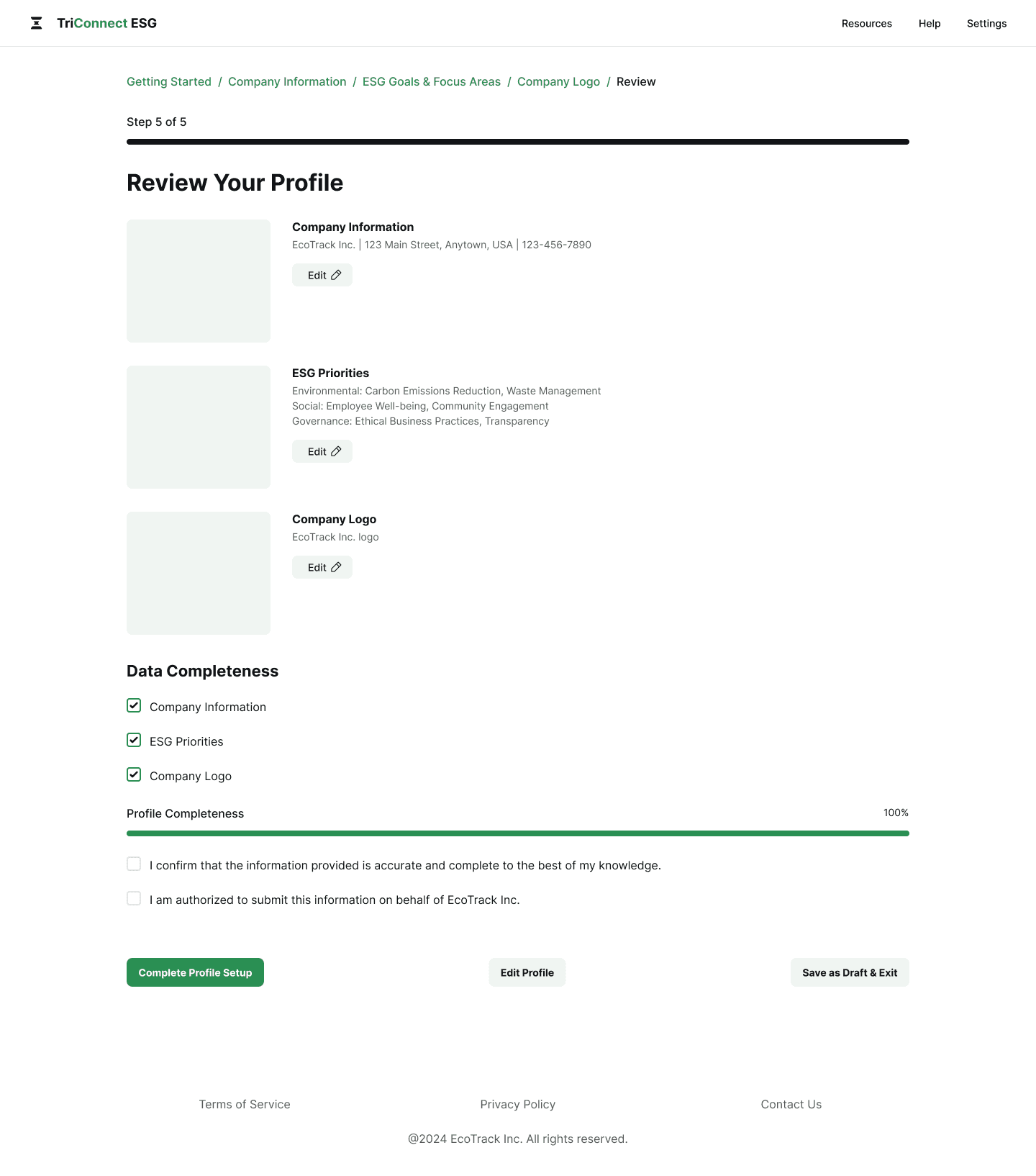
4.
review
HowItWorks
This is what onboarding would look like for SMEs on a platform designed to simplify ESG reporting.
4 step Onboarding Process for
1.
Company Info.
2.
ESG Goals
3.
registration details
4.
review
Dashboard View
While ESG data gets tracked, platform dashboard updates itself with the data and generates a report in accordance to the selected reporting framework.
4 step Onboarding Process for

Reporting Hub
This screen can be accessed by the authorized accounting practitioner associated to the SME and make changes to the data before publishing the ESG report
Shared view for SMEs and Accounting practitioner

Talent Marketplace
SMEs can post jobs, filter professions based on their requirement for an accounting practitioner.
Job post by SMEs for accounting practitioners

Dashboard View
While ESG data gets tracked, platform dashboard updates itself with the data and generates a report in accordance to the selected reporting framework.
4 step Onboarding Process for
Reporting Hub
This screen can be accessed by the authorized accounting practitioner associated to the SME and make changes to the data before publishing the ESG report
Shared view for SMEs and Accounting practitioner
Talent Marketplace
SMEs can post jobs, filter professions based on their requirement for an accounting practitioner.
Job post by SMEs for accounting practitioners
Key Questions
What constraints affected the project?
User interfaces were created as conceptual prototypes to explore systems, workflows, and interaction logic. Since the projects were not intended for production or tied to a specific platform, strict Android or iOS guidelines were not applied. In a real-world or implementation stage, I would adapt the design to the appropriate platform standards.
What was not solved or intentionally left out?
A small, unmoderated primary study was conducted with accounting practitioners in India. However, ESG reporting is still a new area for SMEs, and there is no formal academic training for practitioners in this field yet. Because of this lack of established expertise and reliable primary sources, the project relied mainly on secondary research.
If this project continued, what would the next step be?
If this project continues, the immediate step would be consulting with ESG organisations like GRI (Global Reporting Initiative), CSRD (Corporate Sustainability Reporting Directive), TCFD (TaskForce on Climate-related Financial Disclosures)etc and getting insights on the timeline relating to mandates formally being introduced in the market.

TriConnect ESG
This project creates a unified digital platform where SMEs, accounting practitioners, and investors connect to streamline ESG reporting, verification, and data-driven investment.
Year
Year 3 Semester 5
Course
Serve Design
Duration
6 Weeks
Scope
Sustainability
Research
UI Design
Context
Large companies have teams, tools, and systems to manage sustainability reporting.
Most SMEs lack the time, knowledge, and resources to follow the same complex frameworks.
As a result, their impact goes unrecorded, sustainability efforts stay informal, and decisions are made without reliable data. This creates a gap that is both a knowledge issue and a design problem.
Large companies have teams, tools, and systems to manage sustainability reporting. Most SMEs lack the time, knowledge, and resources to follow the same complex frameworks. As a result, their impact goes unrecorded, sustainability efforts stay informal, and decisions are made without reliable data. This creates a gap that is both a knowledge issue and a design problem.
ESG (Environmental, social and governance) reporting is currently
mandatory only for large, publicly listed companies.
ESG (Environmental, social and governance) reporting is currently mandatory only for large, publicly listed companies.
Environmental
Social
Governance
However, between 2025 and 2035, these mandates are expected to expand toward SMEs, especially those connected to large corporate supply chains or operating in regulated markets.
Environmental
Mandatory
Not yet Mandatory
Social
Governance
Small and Medium Enterpises
Small and Medium Enterpises
90%
90%
large, publicly listed companies
large, publicly listed companies
10%
Which companies are
reporting as of now
Environment Social Governance
Reporting
Small and Medium Enterpises
90%
large, publicly listed companies
10%
10%
Mandatory ESG Reporting
Mandatory ESG Reporting for SMEs
2020-2025
2025-2030
2030-2035
Supply chain pressure on SMEs working under top listed companies
ESG Reporting mandates on SMEs
Industry 5.0
Transition phase
Transition phase where ESG repoting becomes mandatory or highly expected for SMEs. SMEs will need to adapt in this period of tightening sustainability requirements
Small and Medium Enterpises
90%
large, publicly listed companies
10%
10%
Mandatory ESG Reporting
Mandatory ESG Reporting for SMEs
2020-2025
2025-2030
2030-2035
Supply chain pressure on SMEs working under top listed companies
ESG Reporting mandates on SMEs
Industry 5.0
Transition phase
Transition phase where ESG repoting becomes mandatory or highly expected for SMEs. SMEs will need to adapt in this period of tightening sustainability requirements
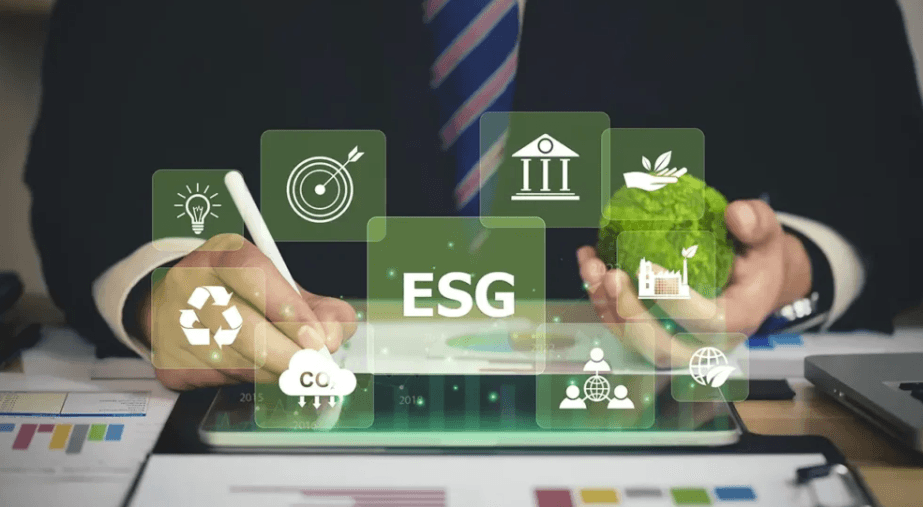
What is ESG reporting?
ESG reporting is the public disclosure of information about a company's performance
Environmental
Social
Governance
on environmental, social, and governance (ESG) factors, which investors, customers, and other stakeholders use to assess its sustainability and ethical practices.
What do SMEs require for ESG reporting?
ESG framework
ESG framework
Provide structured guidelines on what impact data to measure and disclose.
Provide structured guidelines on what impact data to measure and disclose.
Reporting Software
Reporting Software
Collects, organizes, and formats sustainability data into standardized reports.
Collects, organizes, and formats sustainability data into standardized reports.
Accounting Practitioner
Translate complex ESG rules into clear data requirements and prepare compliant reports for SMEs.
Accounting Practitioner
Translate complex ESG rules into clear data requirements and prepare compliant reports for SMEs.
3rd party Assurance
3rd party Assurance
Audit and confirm the accuracy of ESG data to build trust with regulators and investors.
Audit and confirm the accuracy of ESG data to build trust with regulators and investors.
TriConnect ESG
Here's where Triconnect ESG comes in!
It provides a unified platform for SMEs, Accounting Practitioners and potential investors on a single platform.
Hypotheses
ESG framework
ESG framework
Most global ESG frameworks were initially designed for large, publicly listed companies because they have the resources to manage complex data and face the highest scrutiny from institutional investors.
Most global ESG frameworks were initially designed for large, publicly listed companies because they have the resources to manage complex data and face the highest scrutiny from institutional investors.
Framework Optimization
Designing an easier version of ESG reporting framework would solve the issue
BUT
There are already companies working to optimize frameworks for SMEs when ESG reporting gets mandatory for them.
Framework Optimization
Designing an easier version of ESG reporting framework would solve the issue
BUT
There are already companies working to optimize frameworks for SMEs when ESG reporting gets mandatory for them.
Problem Statement
Small and Medium-Sized Enterprises (SMEs), representing 90% of global businesses, are unable to effectively implement environmental sustainability reporting due to cost barriers, skill gaps (30% lack qualified staff), and absence of SME-tailored frameworks, despite increasing regulatory mandates and supply chain pressures requiring ESG compliance.
What would SMEs gain from ESG reporting?
Small and Medium Enterprises (SMEs) gain a significant competitive edge by adopting ESG reporting, as sustainability has shifted from a "branding accessory" to a critical factor in financial viability and capital access. They would get investments from potential Investors and gain investor's trust by the quality of ESG data of the company

HowItWorks
This is what onboarding would look like for SMEs on a platform designed to simplify ESG reporting.
4 step Onboarding Process for
1.
Company Info.
2.
ESG Goals
3.
registration details
4.
review
HowItWorks
This is what onboarding would look like for SMEs on a platform designed to simplify ESG reporting.
4 step Onboarding Process for
1.
Company Info.
2.
ESG Goals
3.
registration details
4.
review
Dashboard View
While ESG data gets tracked, platform dashboard updates itself with the data and generates a report in accordance to the selected reporting framework.
Reporting Hub
This screen can be accessed by the authorized accounting practitioner associated to the SME and make changes to the data before publishing the ESG report
Shared view for SMEs and Accounting practitioner
Talent Marketplace
SMEs can post jobs, filter professions based on their requirement for an accounting practitioner.
Job post by SMEs for accounting practitioners
Key Questions
What constraints affected the project?
User interfaces were created as conceptual prototypes to explore systems, workflows, and interaction logic. Since the projects were not intended for production or tied to a specific platform, strict Android or iOS guidelines were not applied. In a real-world or implementation stage, I would adapt the design to the appropriate platform standards.
What was not solved or intentionally left out?
A small, unmoderated primary study was conducted with accounting practitioners in India. However, ESG reporting is still a new area for SMEs, and there is no formal academic training for practitioners in this field yet. Because of this lack of established expertise and reliable primary sources, the project relied mainly on secondary research.
If this project continued, what would the next step be?
If this project continues, the immediate step would be consulting with ESG organisations like GRI (Global Reporting Initiative), CSRD (Corporate Sustainability Reporting Directive), TCFD (TaskForce on Climate-related Financial Disclosures)etc and getting insights on the timeline relating to mandates formally being introduced in the market.