Back

Based on true events
Based on true events
of the world’s plastic waste comes from packaging
of the world’s plastic waste comes from packaging
of the world’s plastic waste comes from packaging
million
million
million
tons of plastic waste has been generated, averaging 28 kg per person worldwide.
tons of plastic waste has been generated, averaging 28 kg per person worldwide.
tons of plastic waste has been generated, averaging 28 kg per person worldwide.
Indian households” that use at least one HUL product daily, with hair‑care brands described as serving families across urban and rural India, across income tiers.
Indian households” that use at least one HUL product daily, with hair‑care brands described as serving families across urban and rural India, across income tiers.
Indian households” that use at least one HUL product daily, with hair‑care brands described as serving families across urban and rural India, across income tiers.

Carbon emissions
Carbon emissions
Carbon emissions
Mass production and recycling
Mass production and recycling
Mass production and recycling
Personal‑care packaging is a large, plastic‑heavy industry where bottles and pumps are mass‑produced from HDPE and PET and used once before disposal. Recycling systems only recover a portion of this material, so most single‑use dispensers continue to consume virgin resources and add to waste, which modular, longer‑life dispensers could help reduce by reusing standard components instead of constantly remanufacturing them.
Personal‑care packaging is a large, plastic‑heavy industry where bottles and pumps are mass‑produced from HDPE and PET and used once before disposal. Recycling systems only recover a portion of this material, so most single‑use dispensers continue to consume virgin resources and add to waste, which modular, longer‑life dispensers could help reduce by reusing standard components instead of constantly remanufacturing them.
Personal‑care packaging is a large, plastic‑heavy industry where bottles and pumps are mass‑produced from HDPE and PET and used once before disposal. Recycling systems only recover a portion of this material, so most single‑use dispensers continue to consume virgin resources and add to waste, which modular, longer‑life dispensers could help reduce by reusing standard components instead of constantly remanufacturing them.

Carbon emissions

Carbon emissions
Carbon emissions
Product Refill Systems
Product Refill Systems
Product Refill Systems
Refillable packaging is a growing global market, especially in beauty, home‑care, and beverages, but in India it is still mostly limited to pilots and niche contexts. Refill models here struggle to scale because infrastructure is weak, single‑use packaging remains cheaper and easier to distribute, and many consumers and retailers still prefer sealed, disposable packs for convenience and perceived hygiene.
Refillable packaging is a growing global market, especially in beauty, home‑care, and beverages, but in India it is still mostly limited to pilots and niche contexts. Refill models here struggle to scale because infrastructure is weak, single‑use packaging remains cheaper and easier to distribute, and many consumers and retailers still prefer sealed, disposable packs for convenience and perceived hygiene.
Refillable packaging is a growing global market, especially in beauty, home‑care, and beverages, but in India it is still mostly limited to pilots and niche contexts. Refill models here struggle to scale because infrastructure is weak, single‑use packaging remains cheaper and easier to distribute, and many consumers and retailers still prefer sealed, disposable packs for convenience and perceived hygiene.


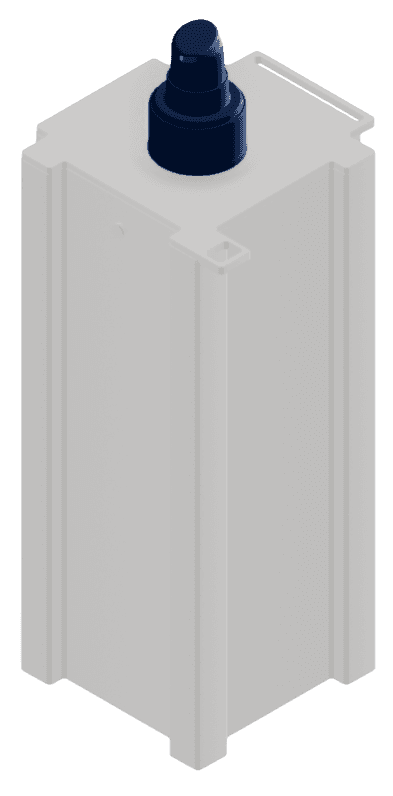
Mass‑market Unilever consumers who buy shampoos like Dove, Sunsilk, and Tresemmé in single‑use plastic bottles typically throw the bottle away when it is empty, while each brand still relies on its own bottle and pump formats; therefore, there is a need for a standardized, stackable modular shampoo dispenser system for these Unilever brands, so that plastic packaging can be reused instead of recycled after single use, transport and storage become more efficient, and shared components such as pumps and outer bodies can be manufactured, interchanged, and repaired at lower cost across product lines.
Mass‑market Unilever consumers who buy shampoos like Dove, Sunsilk, and Tresemmé in single‑use plastic bottles typically throw the bottle away when it is empty, while each brand still relies on its own bottle and pump formats; therefore, there is a need for a standardized, stackable modular shampoo dispenser system for these Unilever brands, so that plastic packaging can be reused instead of recycled after single use, transport and storage become more efficient, and shared components such as pumps and outer bodies can be manufactured, interchanged, and repaired at lower cost across product lines.
Mass‑market Unilever consumers who buy shampoos like Dove, Sunsilk, and Tresemmé in single‑use plastic bottles typically throw the bottle away when it is empty, while each brand still relies on its own bottle and pump formats; therefore, there is a need for a standardized, stackable modular shampoo dispenser system for these Unilever brands, so that plastic packaging can be reused instead of recycled after single use, transport and storage become more efficient, and shared components such as pumps and outer bodies can be manufactured, interchanged, and repaired at lower cost across product lines.
How Things Should Be
How Things Should Be
How Things Should Be
Why Problem Matters
Why Problem Matters
Why Problem Matters


Inspired by the work of
Inspired by the work of
Inspired by the work of
Maurits Cornelis Escher
Dutch graphic artist
Maurits Cornelis Escher
Dutch graphic artist
Maurits Cornelis Escher
Dutch graphic artist
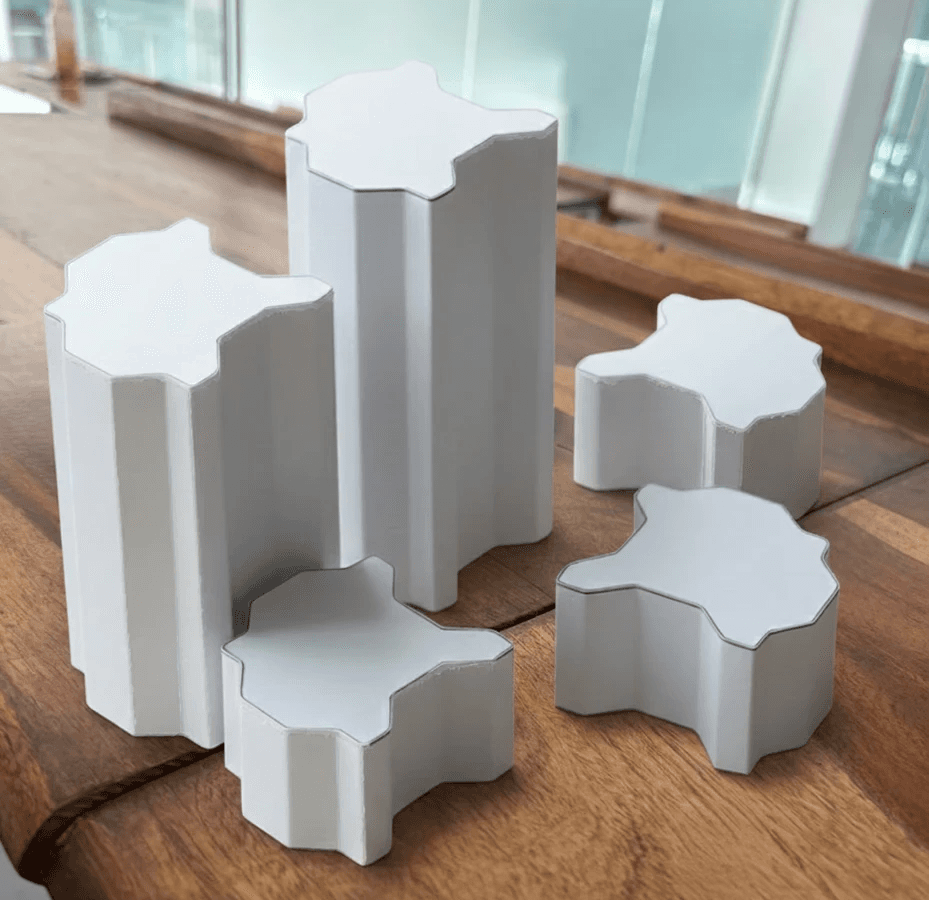
M.C. Escher's tessellations are famous interlocking patterns filling a plane with repeating shapes, often animals or figures, created by transforming basic geometric tiles through symmetry operations (translation, rotation, reflection)
M.C. Escher's tessellations are famous interlocking patterns filling a plane with repeating shapes, often animals or figures, created by transforming basic geometric tiles through symmetry operations (translation, rotation, reflection)
M.C. Escher's tessellations are famous interlocking patterns filling a plane with repeating shapes, often animals or figures, created by transforming basic geometric tiles through symmetry operations (translation, rotation, reflection)


250 ml
250 ml
250 ml
Trial / Travel
Trial / Travel
Trial / Travel
400 ml
400 ml
400 ml
Standard / Daily Use
Standard / Daily Use
Standard / Daily Use
650 ml
650 ml
650 ml
Family / Economy
Family / Economy
Family / Economy
18.1 cm
18.1 cm
18.1 cm
11.1 cm
11.1 cm
11.1 cm
6.9 cm
6.9 cm
6.9 cm
6 cm
6 cm
6 cm
6 cm
6 cm
6 cm
8 cm
8 cm
8 cm
8 cm
8 cm
8 cm
8 cm
8 cm
8 cm
8 cm
8 cm
8 cm
8 cm
8 cm
8 cm
8 cm
8 cm
8 cm
8 cm
8 cm
8 cm
6 cm
6 cm
6 cm
6 cm
6 cm
6 cm
6 cm
6 cm
6 cm
Dimensions
Dimensions
Dimensions


Start Here
Start Here
Start Here









Track your purchases
How it works
Track your purchases
How it works

Home Page
Home page shows data visualization statistics of every time you refill your bottle with the product and reduce waste
Home Page
Home page shows data visualization statistics of every time you refill your bottle with the product and reduce waste
Home Page
Home page shows data visualization statistics of every time you refill your bottle with the product and reduce waste

Scan and Track
Generating new receipt would contribute to data stats of how much you saved on.
Scan and Track
Generating new receipt would contribute to data stats of how much you saved on.
Scan and Track
Generating new receipt would contribute to data stats of how much you saved on.

Profile
Profile
Profile

Purchase History
Purchase History
Purchase History

purchase details
purchase details

Key Questions
What constraints affected the project?
One of the prominent feedback that I've been getting for this project is about the brand differentiation required in today's competitive market. Using a common form for all brands would be highly risky for targetting specific target audiences.
What was not solved or intentionally left out?
User interfaces were created as conceptual prototypes to explore systems, workflows, and interaction logic. Since the projects were not intended for production or tied to a specific platform, strict Android or iOS guidelines were not applied.
If this project continued, what would the next step be?
The obvious next step would be looking for more relevant ideations aiming towards brand differentiation and secondly, aiming at a market research for the need of this product in today's FMCG industry.